
Walk into any modern kitchen store today and you’ll spot copper pots and pans hanging front and center. Steel used to rule the shelf, but home cooks are moving back to copper cookware, and the reasons go well beyond good looks. Copper heats faster, cooks more evenly and handles daily use well. Yes, a copper frying pan costs more than a steel one. Still, if you cook most days, you’ll feel the difference the first time you use it.
One warning before you shop: copper utensils aren’t all the same. Some pieces are built to last for years, and some are thin shells that dent in a month. Here’s how to find the best copper cookware and tell it apart from the rest.
What Makes Copper Cookware Better for Cooking
Heat that spreads evenly
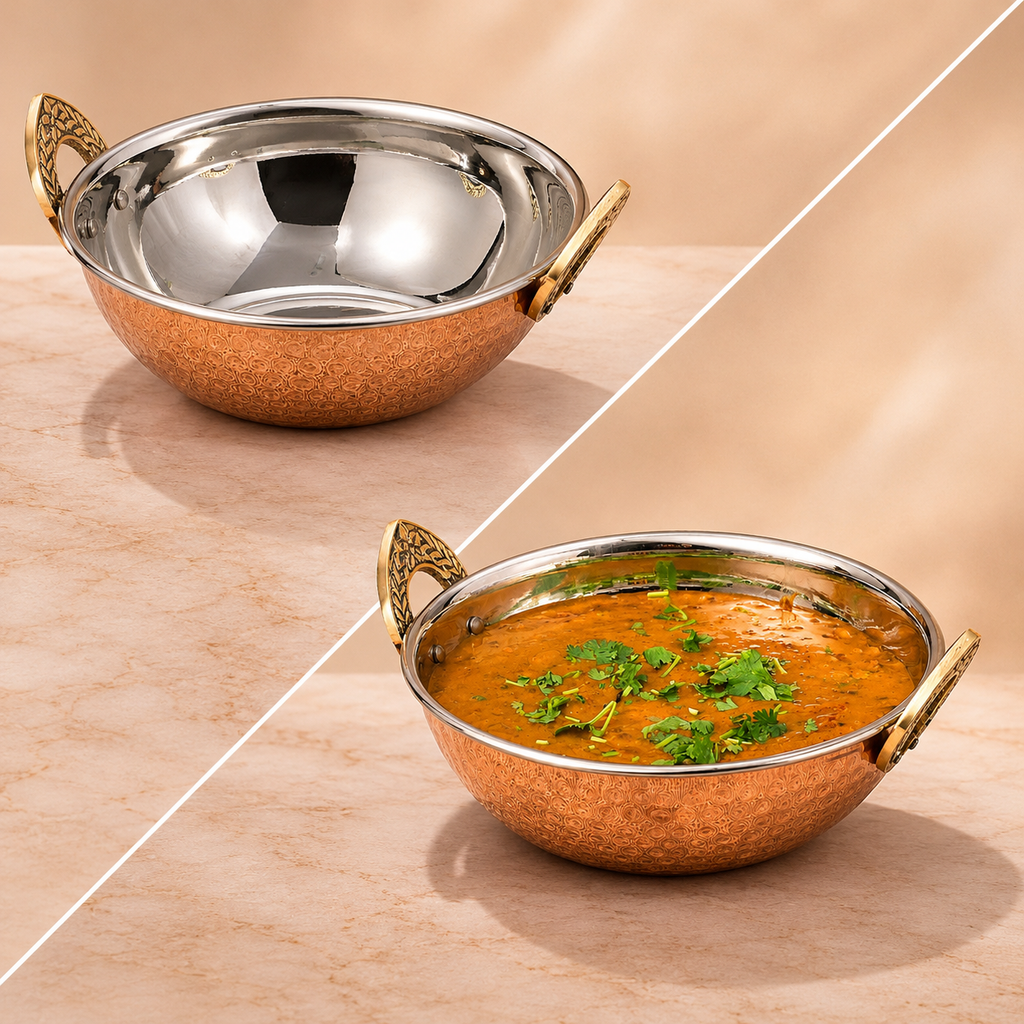
Copper is one of the best heat conductors among cookware metals. The warmth travels across the whole pan instead of staying in one spot. This helps a lot when you’re cooking a big meal for the family. With steel, you end up tilting and moving the pan around to cook things evenly. Copper pots and pans do that work for you, and they respond quickly when you turn the flame up or down.
Fewer hot spots, less sticking
Steel pans heat unevenly, so some patches get far hotter than others. That’s why food burns in one corner and sticks to the surface. Those same patches also wear out non-stick coatings early. Copper avoids the problem because the heat stays balanced, so your food sticks less and the coating stays in good shape for longer.
Characteristics of Best Copper Cookware
Good pure copper cookware has a few clear qualities. Check these before you buy, and you’ll avoid most of the common mistakes.
1. Thickness of the metal
Flame hits the base of your pan every time you cook, and over the years that wears the metal thinner. A thin copper pan dents, warps and cooks poorly. Thickness is the single biggest sign of quality, so check it before anything else.
- Handle material: Go for cast iron handles. Pans with brass handles often come with thinner bases.
- Edge style: If the rim looks rolled over, the metal is thin. Skip that piece for cooking.
2. Hammered or smooth?
Hammered copper catches the eye, no doubt. But a nice finish doesn’t mean better cooking. Machines make most copperware these days, including the hammered kind, so a “handcrafted” tag can be nothing more than a sales line. For the stove, smooth copper usually wins because it’s thicker. For a copper water bottle, copper jug or copper tumbler, pick hammered, since the textured surface gives the water more contact with copper.
3. Tin or stainless steel lining?
You’ll hear plenty of confusing advice on this. The basic rule is simple: any cookware you cook in must be lined. Tomatoes, vinegar and other acidic foods react with bare copper, and you don’t want that in your food. Tin-lined copper cookware and stainless steel lined copper cookware both do the job, but they work differently.
Tin lining
- Has been used for thousands of years to keep copper from seeping into food
- Smooth and naturally non-stick, so it’s an alternative to Teflon, which newer studies have linked to health worries
- Heats well and holds up against acidic ingredients
- Releases tiny traces of tin as it oxidises, which is believed to help with tiredness
- Drawbacks: It wears off with use and needs fresh coating roughly every 10 years. It can’t handle very high heat either, since tin starts melting at 450°F. Keep steel scrubbers away from it.
Stainless steel lining
- Today’s more common choice
- Easy to clean and tough
- Doesn’t tarnish or oxidise easily, so it outlasts tin by a wide margin
- Drawbacks: It spreads heat less evenly, and food has a tendency to stick
4. Weight and solid feel
Good copper cookware feels heavy and solid in the hand. If a pan feels light or flimsy, the metal is probably thin. Thin pans heat unevenly, dent easily and don’t last long.
5. Smooth finish and clean joints
Run your hand over the surface and the lining. There should be no cracks, deep scratches, dents or rough patches. Check that the seams and joints are neat and well finished, because poor workmanship usually fails first.
6. Firmly attached handles
Handles should be fixed tightly with strong rivets and feel steady when you lift the pan with food in it. A loose handle is a safety risk, especially with a heavy pot on the flame. Ideally, the handle should stay comfortable to hold while cooking.
7. Purity of the copper
Pure copper is not magnetic, so a quick magnet test helps: if a magnet sticks to the body, it isn’t pure copper. Look for sellers who clearly state the copper purity. Be careful with offers that look too cheap, because very low prices often mean thin or mixed metal.
8. A well-fitting lid
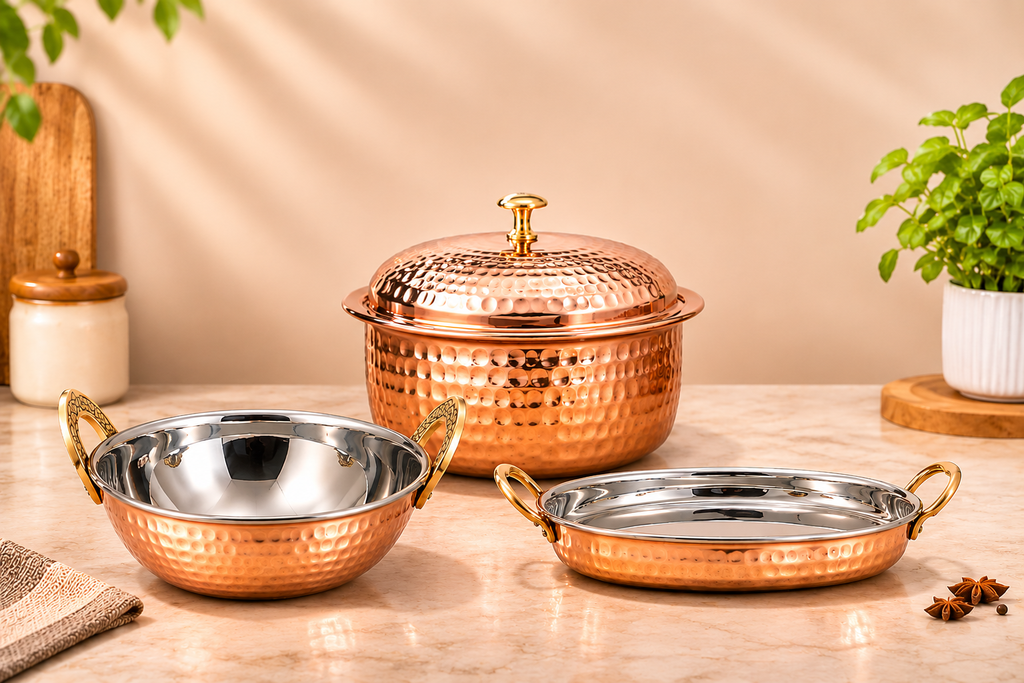
A lid that sits snugly on the rim keeps heat and moisture inside, so your food cooks faster and stays flavourful. A loose or wobbly lid wastes heat and is usually a sign of low-quality manufacturing.
9. Stove compatibility
Plain copper does not work on induction cooktops. If you want copper cookware for induction, choose pieces with a magnetic steel layer on the base. On a gas stove, regular copper cookware works well.
10. Easy care and cleaning
Copper naturally darkens over time, and that is normal. You can restore the shine with a mix of lemon and salt, or tamarind. Wash gently, avoid steel scrubbers (especially on tin lining) and dry the vessel well after washing to keep it looking good for years.
Tin vs Stainless Steel Lining: Quick Comparison
| Feature | Tin Lining | Stainless Steel Lining |
|---|---|---|
| Non-stick feel | Naturally non-stick | Food can stick |
| Heat spread | Even and steady | Less even |
| Lifespan | Needs re-tinning about every 10 years | Lasts much longer |
| Upkeep | Handle gently, no steel scrubbers | Easy to clean |
| High-heat cooking | Not suitable (melts at 450°F) | Works fine |
| Acidic foods | Resistant | Resistant |
| Ideal for | Careful, traditional home cooking | Busy everyday kitchens |
In short: Choose tin if you don’t mind a little extra care. Choose stainless steel if you’d like something sturdy that asks for less effort.
FAQs
Q1. Is copper cookware really worth the money?
For regular cooks, yes. It heats evenly, food sticks less, and a well-built piece can serve you for many years. Spread across that lifespan, the higher price makes sense.
Q2. Is cooking in copper safe?
It is, as long as the vessel has a proper lining. The lining keeps acidic foods from touching the copper. Don’t cook tomato or vinegar-based dishes in unlined copper.
Q3. How can I tell if a copper pan is thick enough?
Look at the rim and the handle. A rolled rim points to thin metal, and a brass handle often goes with a thinner base. Cast iron handles and flat, solid edges are better signs.
Q4. Hammered or smooth: which should I buy?
Pick smooth for cooking because it’s generally thicker. Pick hammered for drinking-water jugs and tumblers, where extra surface contact with the water helps.
Q5. How long does tin lining last?
Around 10 years, depending on how you use it. Skip steel scrubbers and very high flames to make it last longer.
Q6. Which lining suits daily cooking better?
It depends on you. Tin gives better non-stick performance and good heat transfer. Stainless steel lasts longer and is easier to maintain, though food may stick more.
Q7. Is “handmade” copperware always handmade?
No. Most pieces today come off machines, even hammered ones. Ask the seller for proof before you pay extra for the label.
Q8. Can I use copper cookware on an induction cooktop?
Plain copper doesn’t work on induction, because it isn’t magnetic. Choose a copper vessel with a magnetic steel layer on the base, or stick to gas.
Q9. How do I clean tarnished copper cookware?
Rub the outside with a lemon dipped in salt, or use tamarind paste, then rinse and dry well. Never use steel scrubbers on a tin-lined interior.
Q10. How can I check if the copper is pure?
Hold a magnet against it. Pure copper is not magnetic, so if the magnet sticks, the metal is mixed or has a steel layer. Also ask the seller to state the purity clearly.