
Walk into an older Indian home, and chances are you’ll spot a copper vessel sitting quietly in the kitchen. Nobody made a fuss about it. It was just where the drinking water lived. Now that people are rethinking plastic bottles and chasing simpler habits, the copper jar is making a comeback, and honestly, it deserves to.
Let’s look at why this old habit still makes sense, how to use it properly, and what to check before you spend your money.
Copper Has Been Around Longer Than You Think
People have worked with copper for roughly 10,000 years. Copper ores were found on the island of Cyprus around 3000 BC, and the Romans called the metal cyprium. Over time, that became cuprum, and eventually the word we use today.
India’s connection is just as old. Records suggest copper was used to store and disinfect drinking water somewhere between 2600 and 2200 BC. The Egyptians used it on wounds and burns around 1500 BC, and the Greeks used it for ulcers. So when you fill a copper carafe tonight, you’re following a routine that has survived thousands of years. That says something.
So, What Is Tamra Jal?
In Ayurvedic practice, water that rests overnight in a copper vessel is known as Tamra Jal. It couldn’t be simpler: pour the water in at bedtime, let it stand until morning, and make it the first thing you drink after waking. Ayurveda suggests this routine keeps the three doshas (Vata, Pitta, and Kapha) in balance and aids digestion and overall health.
A copper water carafe fits this routine nicely. It sits on your bedside table or kitchen counter, looks good, and takes no effort at all.
What Makes a Copper Jar Special?
Copper is an essential trace mineral. The body requires it only in tiny amounts, but it cannot do without it. Copper takes part in the production of melanin, the pigment responsible for the colour of our skin, hair and eyes. It also assists in absorbing iron, helps form haemoglobin, and contributes to the strength of bones and the health of nerves.
There’s also the antimicrobial side. Copper surfaces are known to slow the growth of bacteria like E. coli and Staphylococcus aureus. That’s the main reason water stays fresher in copper than in many other containers. Traditionally, people have also linked copper with joint comfort, heart health, and thyroid balance, though it’s best to see it as part of a healthy lifestyle and not a cure for anything.
Copper vs. Plastic, Steel and Glass
Here’s a quick side-by-side so you can see where copper stands.
| Feature | Copper Jar | Plastic | Steel | Glass |
| Antimicrobial surface | Yes | No | No | No |
| Ayurvedic tradition | Yes | No | No | No |
| Reusable and eco-friendly | Yes | Limited | Yes | Yes |
| Durability | Excellent | Low | High | Fragile |
| Premium look | Excellent | Basic | Good | Good |
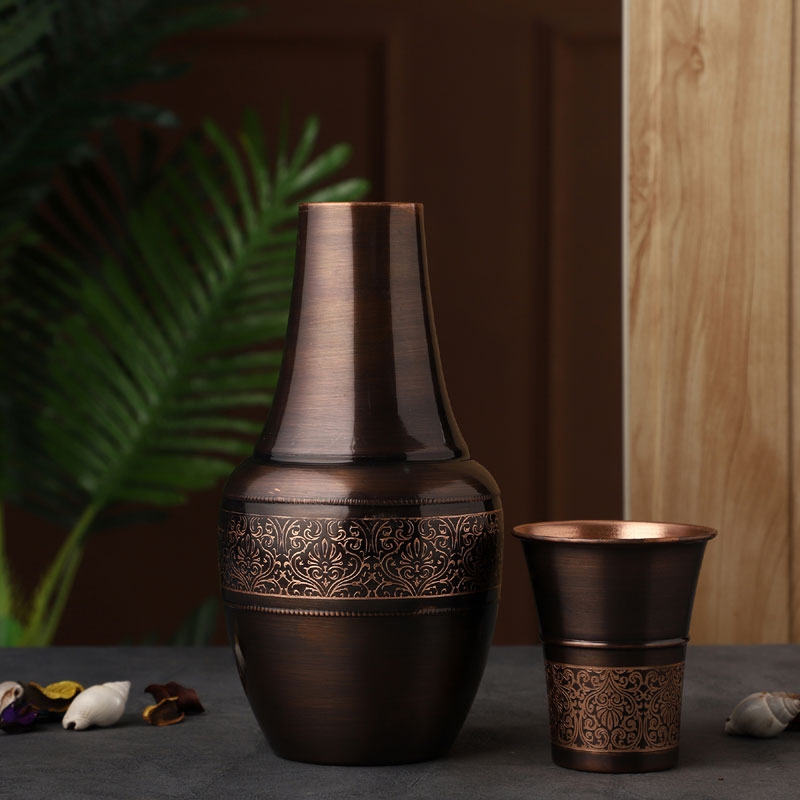
How to Choose a Pure Copper Carafe
This is where many buyers get caught. Not everything that looks like copper is copper. Some products are plated, lacquered inside, or mixed with other metals, and then you lose the whole point of buying one.
A genuine pure copper carafe should be made of food-grade copper with 99% purity or higher. The inside should be smooth and seamless, so it’s easy to wash. The lid should fit snugly, because nobody wants a leak in the bag or on the table. And ask the seller plainly about purity. A good seller will answer without fuss.
Looks matter too. A hammered or polished finish can make a simple copper jar feel like a proper gift for weddings, housewarmings, or festivals.
Using Your Copper Carafe the Right Way
The routine is easy, but a few rules help:
- Pour in clean, room-temperature water.
- Let it sit for 6 to 8 hours, or through the night.
- Have it on an empty stomach in the morning.
- Use the vessel for water alone. Lemon juice, curd, and pickles react with copper, so keep them out.
- Limit yourself to 2 or 3 glasses daily. Extra copper does not mean extra benefit.
How to Clean Your Copper Jar
Copper darkens over time. That’s normal, so don’t panic. It’s just the metal reacting with air and moisture, and you don’t need harsh chemicals to fix it.
The easiest trick is to dip half a lemon in salt. Rub it all over, rinse, and the shine comes back. No lemon at home? A paste of salt and vinegar, left for about five minutes, does the job. Baking soda mixed with a little water works too. Wash with a soft sponge, dry it properly, and clean your carafe every two or three days.
Final Thoughts
A copper jar won’t change your life overnight, and anyone who says so is overselling. What it does offer is a simple, sustainable habit with a long history behind it. It looks lovely, lasts for years, and replaces a few plastic bottles along the way.
If you’re ready to try it, explore our range of copper jars, copper carafes, and pure copper carafes at copperutensilonline.com. Every piece is chosen for quality and finish, so you can start your Tamra Jal routine with confidence.